💬 WhatsApp Free Online Consultation (+92 344 5203650)

Blog

  • Gynecomastia Surgery Procedure & Recovery

    Gynecomastia Surgery — Lahore, Pakistan

    Gynecomastia Surgery (Male Breast Reduction) in Lahore: Procedure & Recovery, Step by Step

    Enlarged male breast tissue doesn’t resolve with diet or exercise alone, since it’s usually glandular, not just fat. Here’s exactly what the surgery involves and what recovery actually looks like week by week. For grades, pricing, and booking, see the main Gynecomastia page.

    FCPS · FACS · 800+ Gynecomastia Surgeries

    Dr Saleem, gynecomastia surgeon Lahore
    Dr. Muhammad Saleem, FCPS, FACS

    What is gynecomastia, and why doesn’t exercise fix it?

    Gynecomastia is enlargement of glandular breast tissue in men, distinct from simple fat deposits (pseudogynecomastia) caused by weight gain. Because the underlying tissue is often true glandular tissue rather than just fat, diet and exercise — which reduce fat, not glandular tissue — typically don’t resolve it. This is exactly why surgical correction is the most effective long-term solution for true gynecomastia.

    Severity is classified into four grades, which determines the technique needed. See the main Gynecomastia page for the full grade breakdown and current pricing by grade.

    The gynecomastia surgery procedure, step by step

    1. 1. Assessment

      Determining whether your case involves primarily fat, primarily glandular tissue, or a combination — this decides which technique is used.

    2. 2. Anaesthesia

      Performed under general or local anaesthesia with sedation, depending on the extent of correction needed.

    3. 3. Liposuction (if fat is present)

      Small incisions are used to remove excess fatty tissue around the chest.

    4. 4. Gland excision (if glandular tissue is present)

      Firm glandular tissue that liposuction alone can’t address is removed through a small periareolar incision.

    5. 5. Skin tightening (Grade III–IV only)

      For cases with significant excess skin, additional skin excision may be needed to achieve a flat, natural chest contour.

    6. 6. Closure and compression

      Incisions are closed, and a compression garment is fitted immediately to support healing and reduce swelling. Surgery typically takes 1–2 hours.

    Recovery timeline, week by week

    1. Day of surgery

      Performed under local anaesthesia in most cases — no hospital stay required, you go home the same day with the compression garment already on.

    2. Days 1–3

      Mild swelling and soreness are expected. Rest is recommended, though light walking is encouraged.

    3. Week 1

      Most patients return to desk-based work. Compression garment is worn continuously.

    4. Weeks 2–3

      Most visible swelling subsides; chest contour improvement becomes clearly visible.

    5. 4–6 weeks

      Compression garment continues to be worn to support final settling of tissue and reduce residual swelling.

    6. Week 6

      Most patients are cleared to return to gym and strenuous exercise, following a follow-up check.

    7. 3–6 months

      Final results are fully visible once all residual swelling has resolved.

    Side effects and risks

    Gynecomastia surgery is very safe in trained hands, with rare serious complications. For the full breakdown of possible side effects, see the main Gynecomastia page.

    Why patients choose this surgeon

    Has this surgeon actually done many of these?
    800+ gynecomastia surgeries performed, across all four grades of severity — not occasional cases alongside a broader general practice.
    Will this actually stay flat, or come back?
    Recurrence is rare when glandular tissue is fully excised; significant future weight gain or steroid use is what typically causes new fat deposits, not a failed surgery.

    From patients, not marketing copy

    4.7/ 5 · 86 Google reviewsRead on Google →

    “I recently had my gynecomastia surgery, and I am extremely satisfied with the overall experience and results. From the first consultation till the procedure and follow-ups, everything was handled in a very professional and smooth manner.”

    sultan mirza · Google review

    Gynecomastia surgery questions patients ask first

    Will I need liposuction, gland excision, or both?

    This depends entirely on whether your case is primarily fatty (Grade I, liposuction alone) or involves firm glandular tissue (Grade II–IV, requiring excision), determined at consultation.

    Is gynecomastia surgery painful?

    Most patients report mild to moderate soreness for the first few days, well controlled with standard pain medication. The procedure itself is not felt at all under anaesthesia.

    Will there be visible scars?

    Incisions are small and strategically placed, usually around the areola edge, so resulting scars are minimal and fade significantly over several months.

    Can gynecomastia come back after surgery?

    Recurrence is rare when glandular tissue is fully excised, but significant future weight gain or steroid/anabolic use can cause new fat deposits to develop.

    How soon can I go to the gym after surgery?

    Light walking is fine within days, but strenuous exercise and weightlifting are typically restricted until around week 6, following a follow-up assessment.

    Book a free consultation

    No pressure, no obligation — just a straight answer, then a slot if you want one.

    WhatsApp number
  • Facelift surgical vs Non Surgical

    Facelift Surgery in Lahore — Surgical vs. Non-Surgical

    Surgical vs. Non-Surgical Facelift: Botox, Filler, Threads, or Actual Surgery?

    Botox, dermal filler, thread lifts, and surgical facelift all address facial aging — but they work completely differently, last for different lengths of time, and suit different starting points. Here’s how to tell which one actually fits your face. For pricing and options, see the main Facelift page.

    FCPS · FACS · Surgical & Non-Surgical Options

    Dr Saleem, facelift surgery Lahore
    Dr. Muhammad Saleem, FCPS, FACS

    The real difference: what each option actually does

    Non-surgical treatments (Botox, filler, threads, HIFU) work on top of your existing facial structure — softening wrinkles, adding volume, or providing a mild, temporary lift. Surgical facelift physically removes excess skin and tightens the underlying muscle layer (the SMAS), which is the only approach that meaningfully reverses skin laxity itself, not just camouflages it.

    For the full list of surgical and non-surgical options with current pricing, see the main Facelift page.

    Which one actually fits you?

    • Early lines, no real sagging yet: Botox and light filler are usually sufficient.
    • Volume loss without much loose skin: Filler or fat grafting addresses this directly.
    • Mild sagging, want to avoid surgery: Thread lift or HIFU can offer modest, temporary improvement.
    • Visible jowls, loose neck skin, deeper folds: This is the point where non-surgical options genuinely stop being effective, and surgical facelift becomes the realistic option for meaningful change.

    This is assessed honestly during consultation — not every patient who asks about a facelift actually needs surgery, and not every patient who wants to avoid surgery is a good candidate for non-surgical alternatives alone.

    Why patients choose this practice for this decision

    Will I be pushed toward surgery I don’t need?
    Non-surgical options are offered as genuine first-line treatments for appropriate cases, not simply positioned as a lesser upsell path toward eventual surgery.
    Will I be told non-surgical options can do more than they actually can?
    The real limitation of non-surgical treatments — that they cannot remove excess skin or reverse significant sagging — is stated plainly, not glossed over to make a sale.
    Is the surgeon actually qualified for advanced techniques like deep plane facelift?
    FCPS and FACS credentials with facial plastic surgery training specifically, not a generalist offering an advanced technique without matching experience.

    From patients, not marketing copy

    4.7/ 5 · 86 Google reviewsRead on Google →

    “I had a very positive experience with Dr. Muhammad Saleem and his team. From my first consultation to the follow-up care, I was treated with kindness, professionalism, and respect.”

    Irfan Aslam · Google review

    Facelift questions patients ask first

    Can Botox and filler replace the need for a facelift?

    For early signs of aging, yes, they can meaningfully delay the need for surgery. Once significant skin laxity and jowling develop, neither can substitute for surgical tightening.

    How long do thread lift results actually last?

    Typically 12–18 months, noticeably shorter than surgical facelift results, and the lifting effect is generally more subtle.

    Can I combine non-surgical treatments with a surgical facelift?

    Yes — filler or fat grafting is often combined with a surgical facelift for a more complete result, and Botox can maintain results afterward for dynamic wrinkles surgery doesn’t address.

    At what age should I consider a surgical facelift instead of non-surgical options?

    There’s no fixed age — it depends on the degree of skin laxity and jowling present, which varies significantly between individuals regardless of age.

    Is a deep plane facelift right for everyone?

    Not necessarily — it’s a more advanced technique suited to certain types of sagging. A traditional or mini facelift may be more appropriate depending on your specific anatomy, discussed at consultation.

    Book a free consultation

    No pressure, no obligation — just a straight answer, then a slot if you want one.

    WhatsApp number
  • Revision Rhinoplasty

    Revision Rhinoplasty — Secondary Nose Surgery, Lahore

    Revision Rhinoplasty in Pakistan: Correcting a Failed Rhinoplasty the Second Time, Properly

    If your first rhinoplasty didn’t give you the result you expected — or left you with a new problem altogether — revision rhinoplasty is a distinct, more demanding procedure that requires a surgeon experienced specifically in secondary nose surgery, not just primary cases.

    FCPS · FACS · Istanbul Aesthetic Rhinoplasty Fellowship

    Dr Saleem, revision rhinoplasty specialist Lahore
    Dr. Muhammad Saleem, FCPS, FACS

    What is revision rhinoplasty?

    Revision rhinoplasty (also called secondary rhinoplasty) is surgery to correct the result of a previous nose job — whether that means an appearance you’re unhappy with, a breathing problem the first surgery didn’t fix or actually caused, or a nose that has genuinely healed poorly. It’s one of the most technically demanding procedures in facial plastic surgery, because the surgeon is working with tissue that’s already been cut, scarred, and reshaped once — not a fresh, unoperated nose.

    Why revision rhinoplasty is harder than a first surgery

    1. Scar tissue changes everything

      Internal scarring from the first surgery makes tissue less predictable to work with, and can obscure the normal anatomical landmarks a surgeon relies on.

    2. Less cartilage may be available

      If cartilage was removed or over-resected the first time, a revision may require harvesting additional cartilage from the ear or rib to rebuild structural support.

    3. The goal is often more conservative

      Where a first rhinoplasty might aim for a dramatic change, revision surgery frequently prioritizes restoring structural integrity and breathing function alongside appearance.

    4. Realistic expectations matter more here

      A second surgery can meaningfully improve most concerns, but achieving true perfection after a complicated first result isn’t always possible — this is discussed honestly at consultation, not glossed over.

    Signs your rhinoplasty may need correction

    • Visible asymmetry, a twisted or crooked appearance that developed or worsened during healing
    • A “pinched” or overly narrow tip that looks unnatural or pulls oddly when you smile
    • New or worsened breathing difficulty after the first surgery
    • A visible step-off, notch, or irregularity along the bridge
    • Collapse of the nasal sidewall, sometimes called an “inverted-V deformity”
    • A result that simply never matched what was discussed before surgery

    Revision rhinoplasty cost in Lahore, Pakistan

    2026 pricing — varies more than primary rhinoplasty given case-by-case complexity
    Case complexityTypical cost (PKR)
    Straightforward revision (minor refinement)200,000 – 300,000
    Complex revision (cartilage grafting required)300,000 – 500,000+

    Revision rhinoplasty cost cannot be quoted accurately without an in-person or photo-based assessment, since complexity varies enormously between cases — unlike primary rhinoplasty, which has a more predictable price range. For standard primary rhinoplasty pricing, see the main Rhinoplasty page.

    How a revision rhinoplasty consultation works

    1. 1. Understanding what went wrong

      A detailed discussion of what specifically didn’t work about the first surgery — appearance, breathing, or both — and reviewing any records or photos from the original procedure if available.

    2. 2. Structural assessment

      Examining remaining cartilage, scar tissue, skin thickness, and internal breathing structures to determine what’s actually feasible.

    3. 3. Planning the graft source, if needed

      If more cartilage is needed than remains in the nose itself, ear or rib cartilage may be planned as a graft source — discussed and agreed before surgery, not decided mid-procedure.

    4. 4. Setting a realistic, honest goal

      Establishing what improvement is genuinely achievable for your specific case, rather than promising an outcome that may not be structurally possible.

    Recovery after revision rhinoplasty

    1. Week 1

      Splint in place, more swelling than a typical primary rhinoplasty is common given the additional scar tissue being worked with.

    2. Weeks 2–4

      Splint removed, most visible bruising resolves, though revision cases often carry swelling a bit longer than first-time surgery.

    3. Months 3–6

      Shape continues to settle and refine as internal healing progresses.

    4. Up to 12–18 months

      Final results in revision cases can take longer to fully mature than primary rhinoplasty, given the more complex tissue involved — patience during this period matters.

    Why patients choose this surgeon for revision cases

    Has this surgeon actually handled complex revision cases, not just primary rhinoplasty?
    A dedicated Aesthetic Rhinoplasty Fellowship from Medipol Hospital, Istanbul, with revision and reconstructive cases as part of that specialized training — not general plastic surgery experience alone.
    Will I get an honest answer about what’s achievable, or just reassurance?
    Realistic limitations of a second surgery are discussed directly at consultation — not every case can reach the same outcome a first, unoperated rhinoplasty could have.
    What if I need cartilage from elsewhere?
    Ear and rib cartilage grafting are both genuinely available options when the nose’s own remaining cartilage isn’t sufficient, not something referred elsewhere.

    From revision rhinoplasty patients

    4.7/ 5 · 86 Google reviewsRead on Google →

    “Dr. Saleem is a God-gifted surgeon with an extraordinary mind and artistic creativity. His precision in revision alarplasty exceeded my expectations. He was patient and attentive throughout my nose revision surgery, and my results are very satisfactory.”

    Zohaib Malik · Revision Alarplasty · Google review

    Revision rhinoplasty questions patients ask first

    How long should I wait after my first rhinoplasty before getting a revision?

    Generally at least 12 months, to allow swelling to fully resolve and the true final result of the first surgery to become clear before deciding whether — and what — needs correcting.

    Is revision rhinoplasty more painful than the first surgery?

    Not necessarily more painful, but recovery can involve more swelling and take somewhat longer to settle, given the additional scar tissue involved.

    What if my first surgeon used synthetic implants?

    Synthetic implants can be removed or replaced during revision surgery if they’re causing problems, with your own cartilage typically preferred for reconstruction where sufficient.

    Can revision rhinoplasty fix breathing problems caused by the first surgery?

    Yes, in many cases — functional issues like a collapsed nasal valve or over-resected structure are a common reason patients seek revision surgery specifically, alongside cosmetic concerns.

    Will insurance or a warranty from my first surgeon cover revision costs?

    This depends entirely on your original surgeon and any agreement made at the time — revision surgery performed by a different surgeon is generally a separate, fully-billed procedure.

    Book a free consultation

    No pressure, no obligation — just a straight answer, then a slot if you want one.

    WhatsApp number
  • Verified Plastic Surgeon

    How to Actually Verify a Plastic Surgeon’s Credentials in Pakistan (FCPS, PMDC, CPSP Explained)

    Patients researching surgery in Lahore run into a problem that has nothing to do with medicine: the title “cosmetic surgeon” is not legally protected in Pakistan. Anyone can put it on a signboard. The qualification that actually matters — FCPS in Plastic Surgery — is protected and independently verifiable. Here’s how to check it yourself in under five minutes, regardless of which surgeon you’re considering.

    Step 1: Ask for the exact qualification, not the title

    “Cosmetic surgeon,” “aesthetic physician,” and “skin specialist” are not the same as a plastic surgeon. The specific credential to ask for is FCPS (Plastic Surgery) from the College of Physicians & Surgeons of Pakistan (CPSP) — a 7–9 year postgraduate specialization after MBBS.

    Step 2: Verify the FCPS number directly with CPSP

    Every FCPS holder has a registration ID. CPSP maintains a public verification portal — a legitimate surgeon will give you this number without hesitation, and you can check it directly rather than taking a website’s word for it. Verify Dr. Saleem’s CPSP registration here →

    Step 3: Check PMDC registration

    Separately, every practicing doctor in Pakistan must hold a current license from the Pakistan Medical & Dental Council (PMDC). This confirms the person is a licensed medical doctor at all, independent of their specialty.

    Step 4: Understand international fellowships as a plus, not a substitute

    Fellowships like FACS (Fellow of the American College of Surgeons, USA) or international training stints (Turkey, Singapore, UK) are valuable additions to a surgeon’s training, but they are not a substitute for the core FCPS Plastic Surgery qualification — treat them as supporting evidence, verified through the awarding body’s own directory, not as the primary credential.

    Step 5: Confirm where the surgery actually happens

    A qualified surgeon operating out of an unaccredited clinic room without anesthesia backup is still a safety risk. Ask specifically which hospital or accredited facility the procedure will take place in, and whether an anesthesiologist (not just the surgeon) will be present for anything requiring general anesthesia.

    Red flags to watch for

    • Refusal or vagueness when asked for an FCPS registration number
    • Marketing language (“board-certified”) without naming which board
    • Before/after photos that can’t be traced to the surgeon’s own documented case history
    • Pressure to book and pay a deposit within the first consultation

    Why this matters more than reviews or price

    Reviews and price comparisons are useful, but they say nothing about whether a complication would be safely managed. Confirming the underlying qualification and facility takes five extra minutes and is the single highest-leverage check a patient can do before booking anything.

    Frequently Asked Questions

    Is FCPS the same everywhere, or does the country matter?

    FCPS (Plastic Surgery) from CPSP is Pakistan’s specific specialist qualification; if a surgeon trained or certified abroad, ask which country’s board issued it and verify with that body directly.

    Can I ask to see the physical certificate at consultation?

    Yes, and a legitimate surgeon will have no issue showing it or pointing you to the registry number for independent verification.

    Does a hospital’s reputation guarantee the surgeon operating there is a specialist?

    No — hospitals can host visiting practitioners with varying qualifications; always verify the individual surgeon, not just the facility name.

    Related: About Dr. Saleem

  • Liposuction Recovery

    Liposuction Recovery Week by Week: What to Actually Expect in Pakistan’s Climate

    Most liposuction pages list a generic “recovery takes a few weeks” line and stop there. Patients deserve more specifics than that, especially since swelling and compression garment routines are the two things people ask about most after surgery.

    Days 1–3

    Expect noticeable swelling and bruising in the treated area, along with fluid drainage that is normal, not a complication. A compression garment is worn continuously from the first day — this isn’t optional, it controls swelling and helps skin adhere evenly to the new contour. Walking short distances is encouraged the same day or next day to reduce clot risk; bed rest for days is actively discouraged.

    Days 4–7

    Bruising peaks and starts fading. Most patients can return to light desk-based work by day 5–7, though the compression garment stays on nearly full-time. Discomfort is manageable with prescribed medication; sharp or worsening pain (rather than steady improvement) should be reported immediately.

    Weeks 2–3

    Visible swelling reduces substantially, but the area will still look and feel firmer than the eventual result — this firmness is normal healing tissue, not fat. Light cardio (walking, stationary cycling) can usually resume; heavy lifting and core-intensive exercise stays restricted.

    Weeks 4–6

    Most patients can return to full exercise routines, including the areas treated. Some residual swelling, particularly in the evenings, is still common and continues to settle gradually.

    Months 3–6

    The final, settled contour becomes visible as the last of the swelling resolves and skin fully retracts. This is when patients should judge their actual result — earlier assessments will look less refined than the eventual outcome.

    Lahore-specific consideration: heat and compression garments

    Pakistan’s summer heat makes continuous compression garment wear genuinely uncomfortable, which leads some patients to remove it prematurely — this is the single most common reason for uneven swelling and delayed results we see locally. Breathable, medical-grade garment fabric and scheduling surgery with garment-wear tolerance in mind (e.g., avoiding peak summer for extended procedures) both help.

    Warning signs that need a call, not a wait

    Fever, spreading redness, unusual discharge, or asymmetric swelling that gets worse rather than better after day 4–5 should prompt an immediate call to the surgeon, not a “wait and see.”

    Frequently Asked Questions

    When can I fly home if I’m an overseas patient?

    Most surgeons recommend staying in-country for at least 7–10 days post-op for a follow-up check before a long flight, due to swelling and clot-risk considerations on long journeys.

    Does liposuction result show immediately after surgery?

    No — swelling initially makes the area look larger than before surgery in many patients; this is expected and resolves over the following weeks.

    Can I combine liposuction with a tummy tuck and have one recovery instead of two?

    Yes, when medically appropriate, combining procedures avoids two separate recovery periods — this is a common request from overseas patients with limited time in Pakistan.

    Related: Liposuction · Tummy Tuck · Fat Grafting

  • FUE vs DHI Hair Transplant

    FUE vs. DHI Hair Transplant in Pakistan: Real Differences in Cost, Recovery, and Results

    Almost every hair transplant clinic in Pakistan advertises both FUE and DHI, often without explaining what actually differs between them beyond marketing language like “latest technology.” Here’s the practical difference that actually affects your decision.

    FUE (Follicular Unit Extraction)

    Individual hair follicles are extracted one at a time with a small punch tool, then manually implanted into tiny incisions made at the recipient site. This is the more established, widely practiced technique and works well for most patients, including larger sessions (2,000+ grafts).

    DHI (Direct Hair Implantation)

    A variation of FUE where extracted grafts are loaded directly into a pen-shaped implanter and placed into the scalp without pre-making a separate incision. This can allow slightly higher graft density in a session and marginally less handling time outside the body, but requires a more experienced surgical team since implantation and extraction often happen in parallel.

    Cost difference

    DHI is typically priced 15–30% higher per graft than FUE in Pakistan because of the specialized implanter pens and the additional technician time required. For large sessions (2,500+ grafts), that difference becomes significant — patients should weigh whether the marginal density benefit justifies the added cost for their specific case.

    Which one actually suits you

    • Larger bald areas needing high graft counts: FUE is usually more practical and cost-effective.
    • Small-to-moderate areas needing maximum density in a tight zone (hairline design, beard-to-scalp transplants): DHI’s implanter control can be an advantage.
    • Patients wanting the shortest “outside the body” time for grafts in a smaller session: DHI has a theoretical edge, though outcomes depend heavily on surgeon skill either way.

    What matters more than the technique name

    Graft survival rate depends far more on the surgeon’s experience, extraction technique, and how carefully grafts are handled than on which acronym is used. A skilled surgeon gets excellent results with FUE; an inexperienced one gets poor results with DHI. Ask any clinic directly how many transplants the operating surgeon has personally performed — not the clinic’s overall number, which often includes technician-led cases.

    Recovery — is it different?

    Recovery is nearly identical between the two: scabbing resolves in 7–10 days, transplanted hair sheds around week 3–4 (normal, expected), and new growth begins around month 3–4, with full results visible at 9–12 months.

    Frequently Asked Questions

    Is DHI always “better” like it’s advertised?

    No — it’s a different tool suited to certain cases, not a universal upgrade. Be cautious of any clinic that claims one technique is superior for every patient.

    Can FUE and DHI be combined in one session?

    Yes, some surgeons use FUE for extraction and DHI implanters for placement in cosmetically sensitive zones like the hairline, combining strengths of both.

    Does either technique leave a visible scar?

    Both leave tiny, pinpoint scars scattered across the donor area (not a single linear scar like older strip/FUT methods), which are not visible even with short hair once healed.

    Related: FUE Hair Transplant · PRP Therapy

  • Gynecomastia Grades

    Gynecomastia Grades Explained: Why the Severity of Your Condition Changes the Surgery and the Cost

    One of the most common questions we get after a patient reads generic “gynecomastia cost” pages online is: “why did my friend pay less/more than the number I saw?” The answer almost always comes down to grade — gynecomastia is not one condition with one price, it’s a spectrum, and the surgical approach changes significantly across that spectrum.

    Grade I — Small enlargement, no excess skin

    Localized fullness around the nipple/areola with minimal glandular tissue. Often correctable with liposuction alone or a small excision.

    Grade II — Moderate enlargement

    More visible breast tissue extending beyond the areola, still without significant loose skin. This grade usually needs a combination of liposuction (for the fatty component) and direct excision (for the firm glandular component) — the same reason gynecomastia surgery is rarely “just liposuction.”

    Grade III — Moderate-to-severe enlargement with early skin excess

    Breast tissue is more pronounced and the skin has started to lose elasticity. Excision becomes the primary technique, with liposuction used to blend the surrounding contour.

    Grade IV — Severe enlargement resembling a female breast, with significant excess skin

    This grade often requires skin excision alongside glandular removal to avoid a loose, sagging result — closer in technique to a male breast reduction/mastopexy than a straightforward gynecomastia procedure.

    Why this matters for cost

    Grade I and early Grade II cases are typically quicker, lower-complexity surgeries. Grade III–IV cases involve more operative time, more tissue removal, and sometimes a second surgical step for skin — which is why “gynecomastia cost” answers vary so widely across websites that don’t specify a grade. A fair price quote should only ever follow a physical grading, not a phone-based guess.

    True gynecomastia vs. pseudogynecomastia

    Not every case of chest fullness is glandular gynecomastia — some is pseudogynecomastia (pure fat, common with weight gain), which responds fully to liposuction alone and doesn’t need excision. A proper pre-op exam distinguishes between fat and firm glandular tissue by palpation, sometimes supported by ultrasound in ambiguous cases.

    Recovery differs by grade too

    Grade I–II patients are usually back to desk work within 5–7 days. Grade III–IV cases, especially with skin excision, need a longer compression-garment period and a slower return to upper-body exercise (typically 4–6 weeks).

    Frequently Asked Questions

    Can gynecomastia come back after surgery?

    Removed glandular tissue does not regrow, but significant weight gain afterward can cause new fat deposition in the same area — maintaining a stable weight protects the result.

    Is gynecomastia surgery different if caused by medication or steroid use?

    The surgical approach is the same regardless of cause, but any underlying hormonal cause should be evaluated (and, if possible, stopped) before surgery to prevent recurrence.

    How is my grade determined?

    Through physical examination — pinching and assessing the tissue type, skin laxity, and areola position — not from a photo alone, which is why online-only cost quotes are only ever a rough range.

    Related: Gynecomastia Surgery · Liposuction

  • Rhinoplasty vs Non Surgical Rhinoplasty

    Rhinoplasty vs. Non-Surgical Nose Job in Pakistan: Which One Actually Fits Your Nose?

    Patients researching a “nose job” in Pakistan almost always run into two very different procedures wearing the same nickname: surgical rhinoplasty and non-surgical (filler-based) rhinoplasty. They are not interchangeable, and choosing the wrong one for your specific nose is the most common source of disappointment we see in consultations.

    What non-surgical rhinoplasty can actually do

    Non-surgical rhinoplasty uses injectable filler to camouflage a small dorsal bump, lift a slightly drooping tip, or improve symmetry along the bridge. It cannot make the nose smaller, cannot narrow wide nostrils, and cannot fix breathing problems — filler adds volume, it does not remove it. Results typically last 12–18 months before the filler resorbs.

    What surgical rhinoplasty can actually do

    Surgical rhinoplasty reshapes bone and cartilage directly. It can reduce a hump, narrow a wide or bulbous tip, straighten a crooked nose, correct nostril width, and — when combined with septal correction — fix breathing problems caused by a deviated septum. Results are permanent, with final healing taking up to 12 months.

    A quick way to think about it

    If your main concern is a small bump or a slightly asymmetric tip and you’re not ready for surgery yet, filler is a reasonable temporary option. If your nose is wide, large, crooked, or you have breathing difficulty, filler will not solve the underlying structural issue — surgery is the only route to a lasting change.

    Cost comparison in Lahore

    Non-surgical rhinoplasty is priced per session (filler cost + procedure fee) and is repeated every 12–18 months, which means the lifetime cost often exceeds surgery within 3–4 years. Surgical rhinoplasty is a single upfront cost (see our rhinoplasty cost breakdown) with no repeat expense.

    Who should not get filler in the nose

    Patients with a history of vascular occlusion risk, prior nose surgery with significant scar tissue, or an already-large nose looking to reduce size should not pursue filler — vascular complications in the nose, while rare, are more serious than in other facial areas, and filler cannot achieve reduction goals regardless.

    Making the decision at consultation

    At consultation, Dr. Saleem examines skin thickness, cartilage strength, and the specific correction you want before recommending either path — the same nose can sometimes suit either option depending on exactly what’s bothering the patient.

    Frequently Asked Questions

    Can I try filler first and switch to surgery later if I don’t like it?

    Yes — filler is fully reversible with dissolving injections if needed, which makes it a low-risk way to preview a subtle change before committing to surgery.

    Does non-surgical rhinoplasty hurt?

    It’s done with topical or local numbing and takes about 15–20 minutes; most patients describe pressure rather than pain.

    Will a functional breathing issue push me toward surgery automatically?

    Yes — any breathing problem from a deviated septum requires surgical correction; filler has no functional benefit.

    Related: Non-Surgical Rhinoplasty · Surgical Rhinoplasty

  • Cleft Lip,Palate surgery in Pakistan

    Blog — Cleft Lip & Palate Surgery, Lahore

    Board-certified. Staged repair. Affecting 1 in 700 births worldwide.

    Cleft lip and palate is a condition present from birth, affecting roughly 1 in 700 live births worldwide — treated through a staged surgical repair process, at low cost here in Lahore.

    FCPS · FACS · Congenital Reconstructive Surgery

    Dr Saleem, best plastic surgeon in Pakistan
    Dr. Muhammad Saleem

    What is cleft lip and palate?

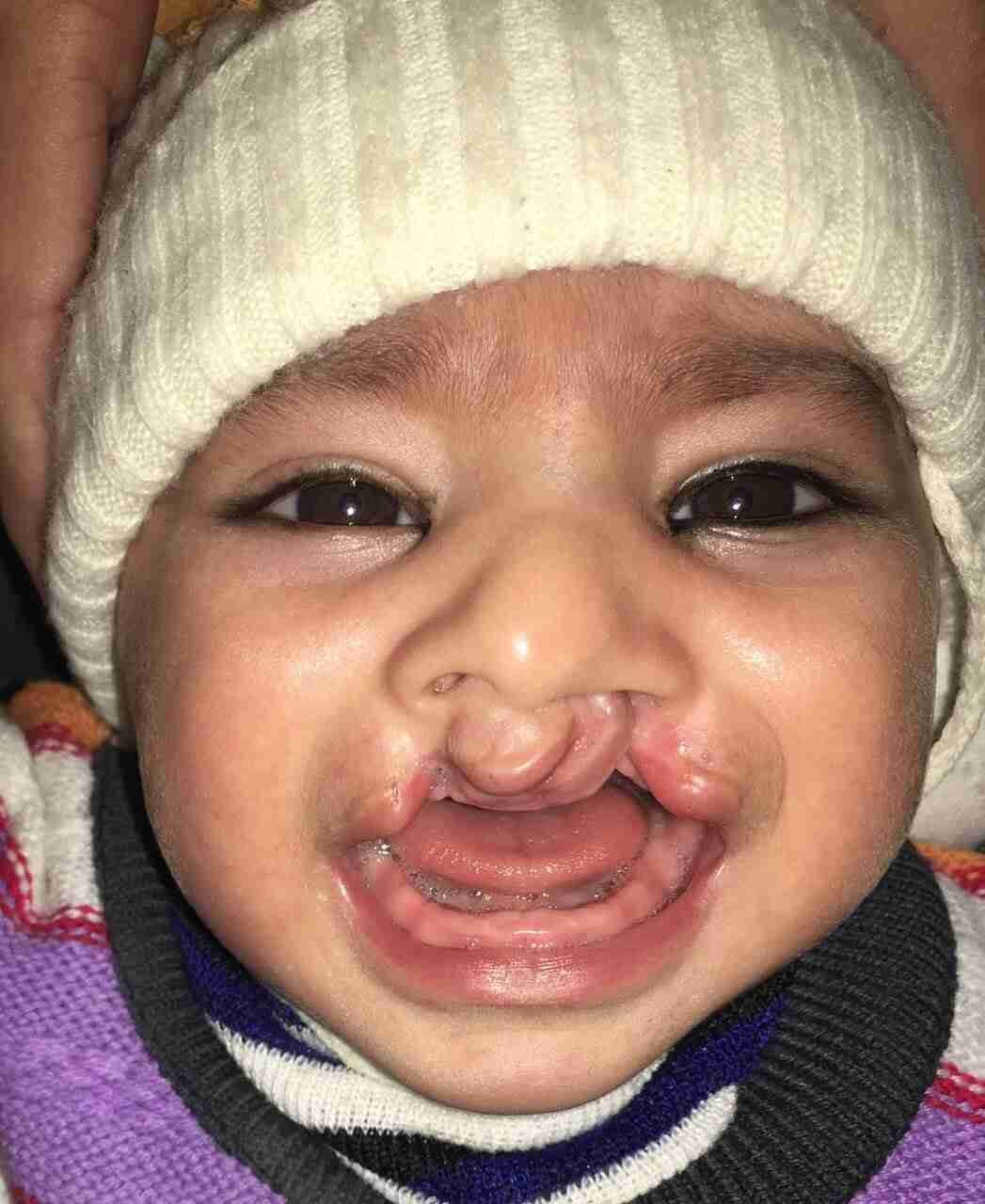
    Cleft lip and palate is a condition present from birth in which the tissue forming the lip and/or roof of the mouth doesn’t join completely during early pregnancy, leaving a gap or split. It’s one of the most common congenital facial conditions worldwide, affecting roughly 1 in every 700 live births. It can occur as cleft lip alone, cleft palate alone, or both together, and can be unilateral (one side) or bilateral (both sides).

    Causes

    The exact cause is often unclear, but recognized contributing factors include genetic predisposition (family history), certain medications taken during early pregnancy, maternal smoking or alcohol use during pregnancy, and nutritional deficiencies such as low folic acid.

    Diagnosis

    Cleft lip is often diagnosed via prenatal ultrasound during pregnancy. Cleft palate, which affects the roof of the mouth, is usually identified during a physical exam shortly after birth, since it may not always be visible on ultrasound.

    Staged surgical repair

    1. Cleft lip repair

      Typically performed around 3–6 months of age, once the infant is healthy and stable enough for surgery.

    2. Cleft palate repair

      Usually performed around 9–18 months of age, to support normal speech development.

    3. Cleft rhinoplasty

      Nose reshaping performed later, often in the teenage years, to correct nasal asymmetry associated with the original cleft.

    4. Jaw surgery

      May be required in some cases, once facial growth is more complete, to correct bite or jaw alignment issues related to the cleft.

    Cleft lip & palate surgery cost in Pakistan

    This surgery is offered at low cost through this clinic — contact directly via WhatsApp for a personalized quote, since pricing depends on the specific stage of repair needed and any associated procedures like cleft rhinoplasty or jaw surgery.

    Why families choose this surgeon

    Is this actually staged correctly for my child’s age?
    Repair timing (lip at 3–6 months, palate at 9–18 months) follows the internationally recognized staged approach, not a single one-time fix.
    Does treatment stop after the initial repair?
    Cleft rhinoplasty and jaw surgery are named as later-stage options as the child grows — care isn’t treated as finished after the first surgery.

    From patients, not marketing copy

    4.7/ 5 · 86 Google reviewsRead on Google →

    “Surgeons were cooperative and all went smooth and good as per plan.”

    Hamid Tarar · Google review

    Cleft lip & palate questions parents ask first

    How common is cleft lip and palate?

    It affects roughly 1 in every 700 live births worldwide, making it one of the most common congenital facial conditions.

    When is cleft lip repair performed?

    Typically around 3–6 months of age, once the infant is healthy and stable enough for surgery.

    When is cleft palate repair performed?

    Usually around 9–18 months of age, to support normal speech development.

    Will my child need more surgery later?

    Possibly — cleft rhinoplasty (often in the teenage years) and jaw surgery may be needed depending on how facial growth progresses.

    Book a free consultation

    No pressure, no obligation — just a straight answer, then a slot if you want one.

    WhatsApp number
  • Lip Reduction Surgery

    Lip Reduction Surgery — Upper, Lower & Double Lip, Lahore

    Smaller, balanced lips. Scar hidden inside the mouth. Home the same day.

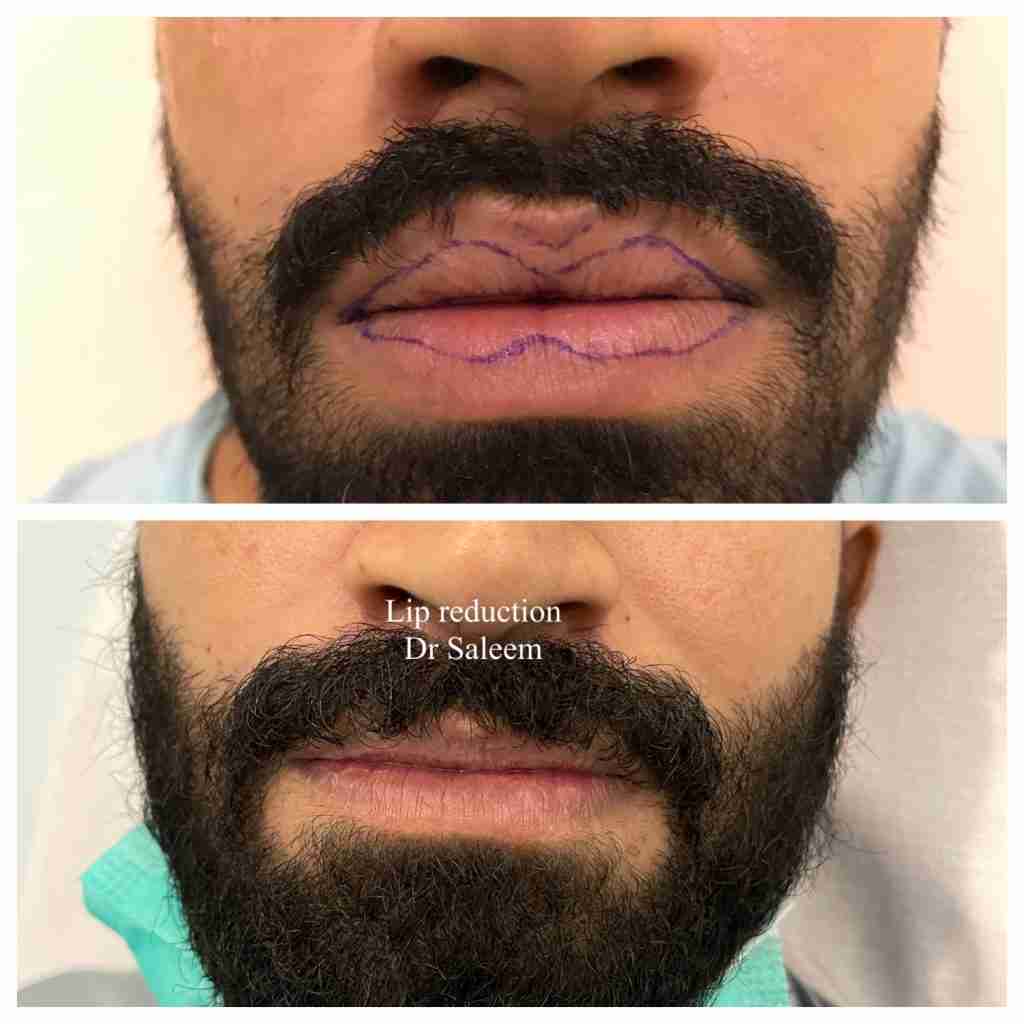
    Dr. Muhammad Saleem has performed lip reduction surgery in Lahore for many years, under local anaesthesia, with the scar hidden inside the mouth. The aim is lips in proportion with your nose, chin and smile, not the thinnest lips possible.

    FCPS · FACS · Istanbul Aesthetic Fellowship · Same-day surgery

    Dr. Muhammad Saleem, FCPS, FACS
    Dr. Muhammad Saleem, FCPS, FACS

    Lip reduction surgery cost in Lahore, Pakistan

    2026 pricing — final cost confirmed at consultation based on the correction needed
    ItemCost (PKR)Cost (USD, approx.)
    Lip reduction surgery (upper, lower or both lips)50,000 – 85,000~$180 – 305
    Medicines after surgerySmall extra cost—

    For comparison: lip reduction typically costs $2,000–5,000 in the US or Europe. Price within the range depends on one or both lips, the technique, and any double lip correction or old filler removal.

    Who performs the treatment

    • FCPSPlastic Surgery, CPSP certified
    • FACSAmerican College of Surgeons
    • IstanbulAesthetic Fellowship, Medipol Hospital
    • LahoreFaisal Town clinic, personally performed

    Why patients choose Dr. Saleem

    Lip reduction is a small operation where precision matters: removing too much is hard to reverse.

    1. Conservative, measured planning

      Tissue is removed in a planned amount and checked from the front and side during surgery, because it is easier to remove a little more later than to replace lost tissue.

    2. Hidden scars

      The incision runs along the inner, wet part of the lip and isn’t seen when your lips are closed or when you talk.

    3. Facial surgery experience

      Lips are planned in balance with your nose, chin and teeth, using experience from rhinoplasty and facial contouring.

    4. Same day, local anaesthesia

      No hospital stay, and follow-up in person or by WhatsApp photos.

    What is lip reduction surgery?

    Lip reduction, known medically as reduction cheiloplasty, removes a measured strip of tissue from the inside of the upper lip, the lower lip or both. The lip is then closed with fine, dissolvable stitches, which rolls it inward and makes it thinner and less protruding. The lip line, Cupid’s bow and natural colour are preserved. It can help with:

    • Naturally large or protruding lips
    • A double lip: a second fold showing when you smile
    • Uneven or asymmetric lips
    • Lips enlarged or lumpy from fillers or illegal permanent injections
    • Thickening after injury or previous surgery
    • Dryness and crusting from lips that stay parted

    If your lips are big because of filler

    If the extra volume is from hyaluronic acid filler, the first step is usually to dissolve it with an enzyme called hyaluronidase. We wait about two weeks and reassess. Surgery is only considered if volume remains, or if a permanent product such as silicone or gel was injected, which cannot be dissolved.

    Lip reduction is different from a lip lift. A lip lift shortens the skin between the nose and upper lip for a long upper lip, not a large one.

    Types of lip reduction offered

    1. Horizontal inner-lip reduction

      Removes an even strip along the inside of the lip for uniform thinning of evenly full lips.

    2. Bikini (Brazilian) technique

      Removes tissue in a pattern that keeps the natural curves and central fullness, so the lips stay shapely rather than flat.

    3. Double lip correction

      Removes only the extra inner fold of the upper lip.

    4. Asymmetry correction

      Removes more tissue from the larger side to balance the lips.

    5. Removal of permanent filler

      Removes as much of the silicone or gel and hardened tissue as is safely possible, then reshapes the lip.

    Who is lip reduction suitable for?

    Good candidates

    • Adults, usually 18 or older, who feel their lips dominate their face
    • People with a double lip or uneven lips
    • People unhappy with lips enlarged by permanent filler
    • Non-smokers, or smokers willing to stop for 2 weeks before and after

    May need to wait or choose another option

    • Pregnancy or breastfeeding
    • Cold sores, mouth ulcers or dental infection, which are treated first
    • Uncontrolled diabetes or blood pressure
    • Recent hyaluronic acid filler, which should be dissolved and allowed to settle first

    The lip reduction procedure

    Dr. Saleem examines your lips at rest, when talking and when smiling, checks your teeth and profile, and plans the amount to remove with you.

    1. Step 1 — Consultation

      Photos, a realistic discussion of the result, and the choice of technique.

    2. Step 2 — Before surgery

      Stop smoking and naswar for 2 weeks. Avoid aspirin, ibuprofen, fish oil and herbal supplements for 7 to 10 days unless advised otherwise.

    3. Step 3 — Local anaesthesia

      The planned tissue is marked inside the lip and numbed. You stay awake and comfortable.

    4. Step 4 — Surgery

      The strip of tissue is removed and the lip closed with dissolvable stitches. It takes 45 to 60 minutes, and you go home the same day with medicines and a mouthwash.

    Lip reduction recovery timeline

    1. Days 1–3

      Peak swelling and tightness. Cold packs, head raised on two pillows, painkillers as prescribed.

    2. Week 1

      Soft, cool food such as yoghurt, khichdi and soup. Avoid spicy, salty and very hot food, including hot chai. Most people return to work in 3 to 5 days.

    3. Weeks 1–2

      Stitches dissolve and most swelling settles. Avoid stretching the lips and heavy exercise.

    4. Weeks 3–6

      Normal food and exercise. The lips may still feel firm or slightly numb.

    5. 3–6 months

      The final shape shows and the inner scar softens.

    Allow at least two weeks before Eid, a wedding or travel, and 10 to 14 days before Ramadan.

    Side effects and risks

    Lip reduction is a common, low-risk operation. Expected effects include swelling and bruising for 1 to 3 weeks and temporary numbness or tingling. Small differences between the sides are common while swelling settles; a persistent difference can be corrected with a minor revision.

    Less common risks include infection, stitches opening (especially with smoking or stretching the lips early), small cysts or firm scar lines inside the lip, and over-reduction, which is why planning is conservative. Call us for increasing pain, spreading redness, fever or bleeding that doesn’t stop with firm pressure.

    Other face procedures by Dr. Saleem

    This page also used to cover other face procedures. Each now has its own detailed page:

    Keep your existing fat grafting section on this page below this list, if you want it here.

    Common concerns about lip reduction

    Will people see a scar?
    No. The incision is on the inner, wet part of the lip, inside the mouth.
    What if too much is removed?
    Planning is deliberately conservative, and the result is checked from the front and side during surgery.
    Am I paying a fair price?
    PKR 50,000 to 85,000 in Lahore, compared with $2,000–5,000 in the US or Europe.

    Expected results

    • Smaller, better-proportioned lips
    • A smooth lip without a second fold (double lip)
    • More even, symmetric lips
    • Lips that close comfortably at rest
    • A permanent result, as removed tissue doesn’t grow back

    Want fuller lips instead? See lip fillers.

    Book a lip reduction consultation →

    From our patients

    4.7/ 5 · 86 Google reviewsRead on Google →

    “From my first consultation to the follow-up care, I was treated with kindness, professionalism, and respect. Dr. Saleem took the time to explain everything clearly.”

    Irfan Aslam · Google review

    Lip reduction questions patients ask first

    How much does lip reduction surgery cost in Lahore?

    With Dr. Muhammad Saleem it costs PKR 50,000 to 85,000, depending on whether one or both lips are treated and how much reshaping is needed.

    Will there be a visible scar?

    No visible outer scar. The incision is on the inner, wet part of the lip, inside the mouth.

    How long is recovery?

    Most people return to work in 3 to 5 days. Most swelling settles in about two weeks, and the final shape shows over 3 to 6 months.

    Is lip reduction permanent?

    Yes. The removed tissue doesn’t grow back, though your lips will still age naturally.

    Can filler-enlarged lips be reduced without surgery?

    If hyaluronic acid filler was used, it can often be dissolved with hyaluronidase. Surgery is considered only if volume remains or a permanent filler was used.

    Can I fast in Ramadan after lip reduction?

    It’s better to plan surgery at least 10 to 14 days before Ramadan, so you can take medicines and eat regular soft meals while healing.

    I live abroad. How long should I stay in Pakistan?

    Plan for at least 7 days after surgery. Later follow-up can be done by WhatsApp photos.

    Book a free consultation

    No pressure, no obligation — just a straight answer, then a slot if you want one.

    WhatsApp number

Medical Disclaimer: All before & after photographs, testimonials, and outcomes shown on this website are for patient education purposes only. Individual results vary based on each patient’s anatomy, health, and healing response — similar results are not guaranteed or possible for every patient. Photos and information on this site do not constitute a promise or guarantee of any specific outcome. Please consult Dr. Muhammad Saleem directly to discuss what results may be realistic for your individual case.

💬 WhatsApp Free Online Consultation (+92 344 5203650)